
L’Epée 1839 captures the quiet elegance of rowing through a series of one-of-one Métiers d’Art reinterpretations of La Regatta, each expressing a distinct artistic vision through the timeless art of Grand Feu enameling.
Designed as a vertical clock with a clean, understated presence, La Regatta draws its long, slender silhouette from a racing skiff cutting through the water. An eight-day power reserve and precise movement reflect the strength, endurance, and disciplined control that define rowing and regatta racing.
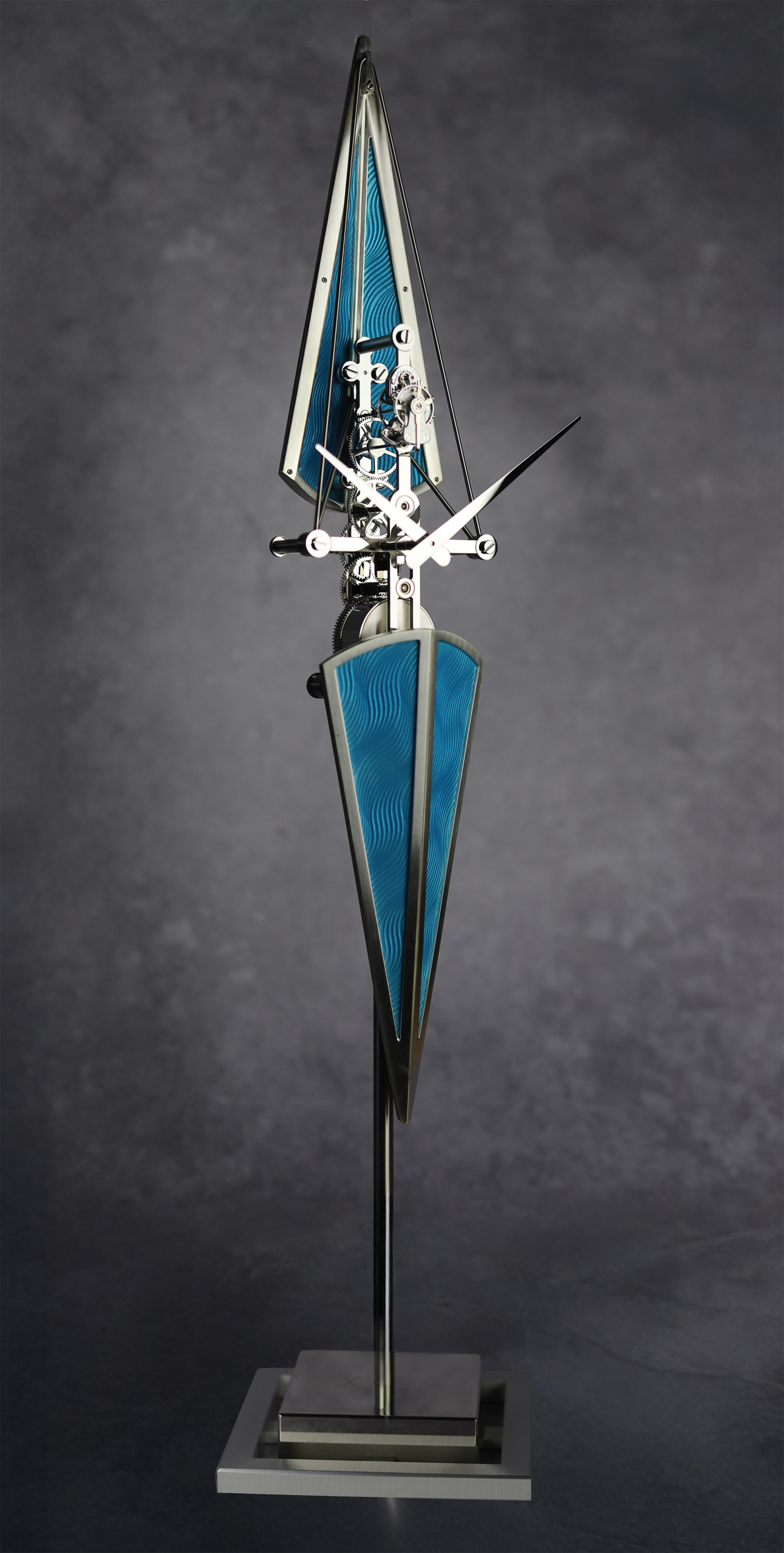
The hull is fully adorned with Grand Feu enameling, hand-applied by David Kakabadze Enamel, a world-renowned Georgian atelier celebrated for its rare craftsmanship. In this exclusive interpretation, enameling becomes a natural continuation of the spirit of rowing. Like the repeated, fluid motion of the oar moving through water, Grand Feu enameling is a slow and careful process, built through successive firings that require patience and perfect timing. Each layer of enamel adds depth and richness, creating a surface that softly catches the light – much like water rippling under the rhythm of the boat.
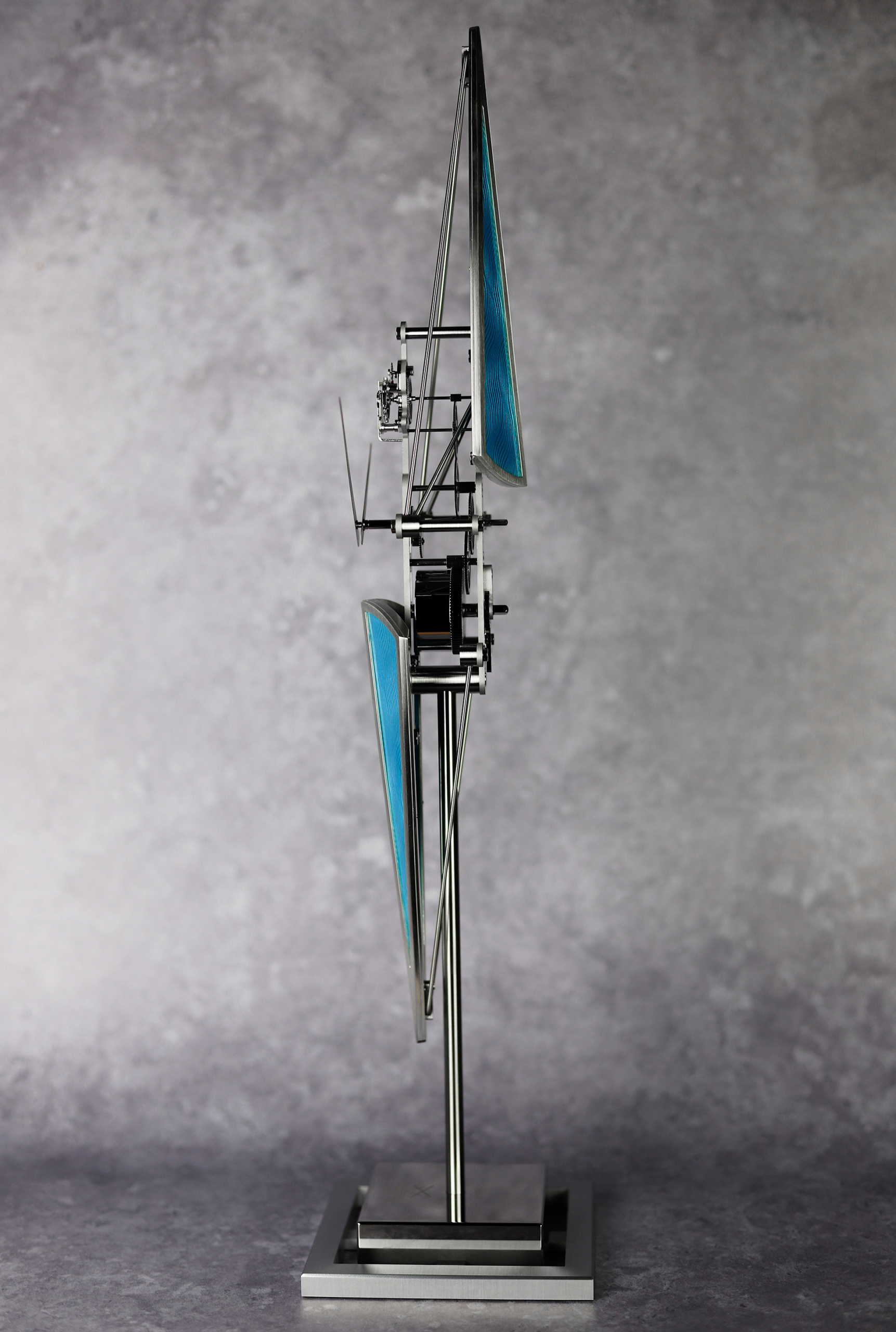
Conceived to bring a sense of serenity into our often fast-paced lives, La Regatta reveals its entire gear train aligned along a single vertical axis. This architectural choice echoes the perfectly upright posture of the rower and the harmony of a crew moving in unison. Positioned at opposite ends of the clock, the barrel and escapement establish a visual and mechanical balance that mirrors the boat’s own stability on the water. In La Regatta, sport and craftsmanship come together in a calm, elegant object, where time flows with rhythm, equilibrium, precision, and grace.
The Art of Grand Feu Enamelling
The Grand Feu enameling technique is a demanding and centuries-old craft. Entirely executed by hand, the process involves applying multiple layers of colored vitrified enamel onto a metal surface, followed by successive firings at extremely high temperatures – generally between 700°C and 750°C. Each firing enhances the depth, luminosity and intensity of the color, while requiring absolute precision, as no two results can ever be identical.
The documented origins of Grand Feu enameling date back to Byzantine and Georgian arts of the 8th century, anchoring these contemporary creations in a rich historical lineage. On the Regatta, the enamel surface magnifies the sculptural lines and volumes of the piece, offering a striking contrast between mechanical horology and artisanal refinement.
Each piece explores a specific enameling technique and artistic inspiration, lending every creation its own interpretation and character:
La Regatta Umi – « Sea » in Japanese
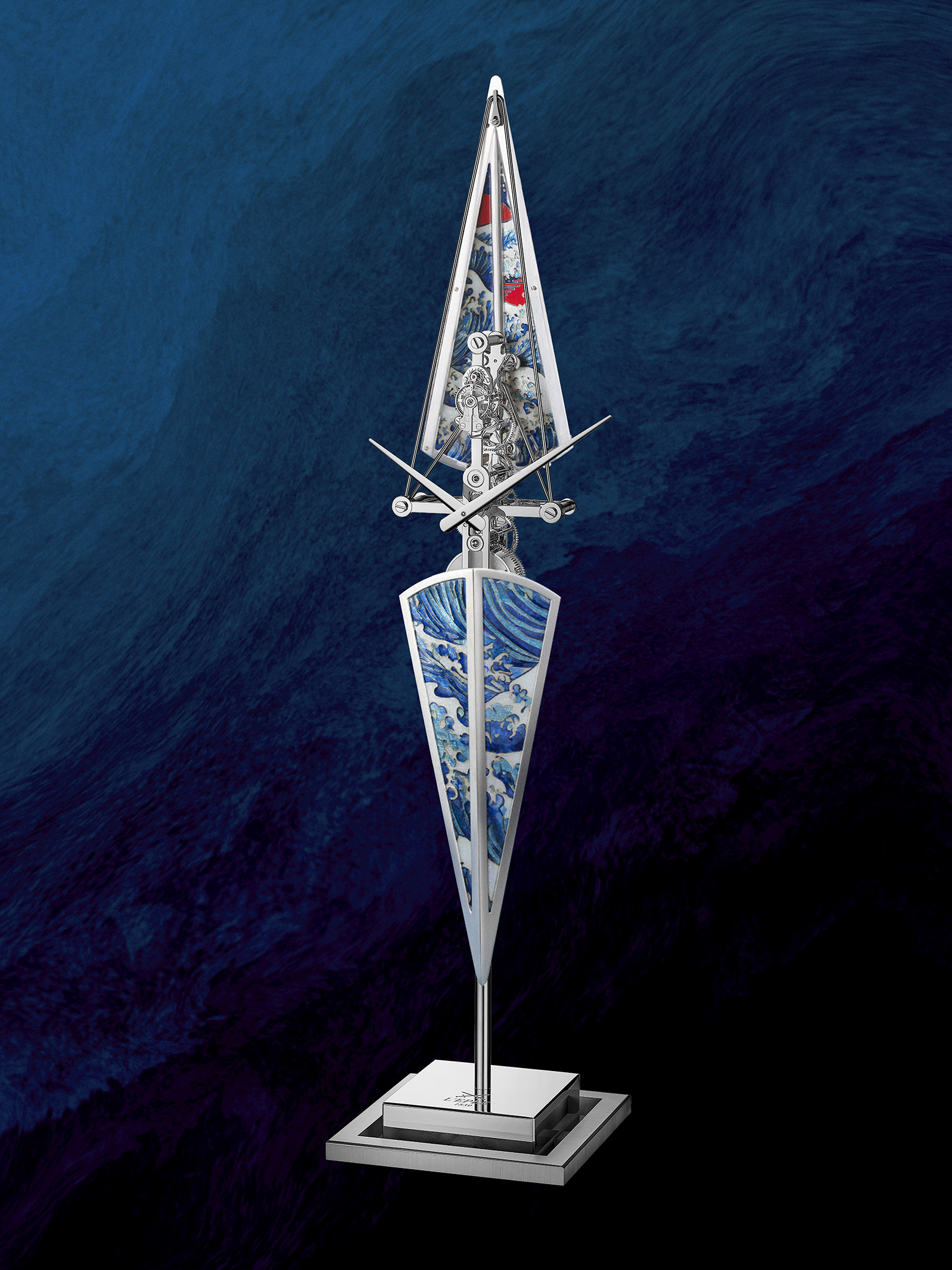
Inspired by the waves depicted in Japanese master Hokusai’s paintings, this piece features finely executed cloisonné enamel enhanced by the paillons technique, consisting of thin silver leaves inlaid in the background, capturing the rhythmic movement and power of the sea. The detailed cloisonné enamel work evokes waves rising and breaking, telling the story of La Regatta facing the elements head-on and translating the clock’s inherent elegance into a dynamic maritime expression.
Cloisonné enameling
The cloisonné technique often begins with hand-decorated metal, engraved with radiating lines or intricate curves, then coated with transparent enamel to reveal the patterns beneath. In cloisonné enameling, ultra-fine gold wires – thinner than a strand of hair – are shaped into delicate cells that are filled with enamel, color by color. Each hue, created by adding specific metal oxides, is fired separately at its ideal temperature. Some pieces demand 12 to 15 firings, as even a few seconds too long in the kiln can undo days, or weeks of painstaking work.
The paillons technique
The paillons technique is a refined enameling method valued for its luminosity and depth. Using extremely thin silver leaves placed beneath transparent enamel layers, it creates a vibrant play of light and a cooler, brighter reflection that enhances movement and visual depth.
La Regatta Blue Horizon
The Regatta returns to its minimalist silhouette, enriched by the depth of blue flinqué enameling technique. Like a vessel cutting through water, its surface subtly shifts with the light, creating optical movement that enhances the impression of motion.